
Blending Beats, Tracks and EQ for Band to DJ Transitions
A seamless band-to-DJ transition depends on timing the handover to the music’s phrasing, not just matching its beats. Dance music commonly moves in phrases of 16 or 32 beats, so bringing in the next track at a phrase boundary can help the change feel natural. Beatmatching, a compatible track choice and careful EQ then keep the sound flowing.
It’s easy to focus on the moment one song ends and the next begins. But the band’s final live song and the DJ’s first track should feel like part of the same celebration, carrying the energy forward rather than letting it drop.
A seamless band-to-DJ transition comes down to preparation: choose compatible tracks, agree on the cue and plan how the handover will sound. This guide explains how tempo, musical phrasing, EQ and filters can shape the change, whether the DJ’s track arrives with a big drop or builds the room gradually. With clear coordination, the switch can feel polished and in step with the dance floor.
Table of Contents
1. Beatmatching and BPM synchronisation
Beatmatching aligns two tracks’ beats so the incoming song joins without a jarring tempo shift. A DJ can read its BPM in DJ software or calculate the tempo manually. While the band’s final song plays, the DJ cues the next track in headphones and makes small tempo adjustments to bring the beats into sync. This preparation helps the DJ time the entrance to the live song’s ending.
Before the event, the band and DJ should agree on the final song, its ending and the handover cue. Choose a clear signal, such as a gesture from the bandleader, so the DJ knows when to start the incoming track. Sharing the final song and planned DJ opener in advance also gives the DJ time to assess the tempo and prepare cue points.
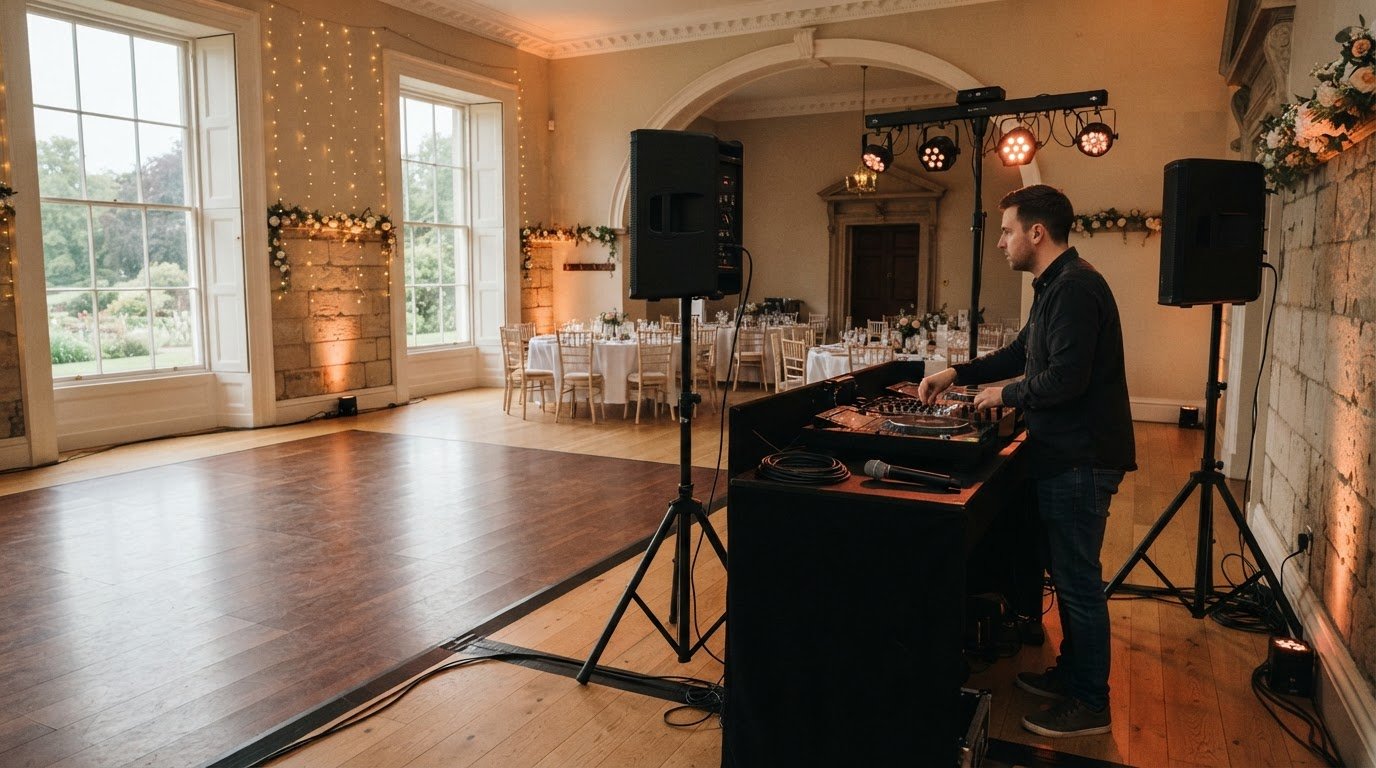
A smooth handover depends on coordinating the band’s sound system with the DJ’s playback setup, which may include a DJ controller or software, headphones, a mixer and speakers. The DJ uses headphones to cue privately, while the mixer’s VU meters help match track levels. A sound check can reveal a level mismatch or unclear cue before guests reach the dance floor.
There’s no single changeover duration that suits every band and DJ. Plan around the final song’s ending, the incoming track’s cue point and any steps needed to switch audio sources. If the band ends on a sustained note, the DJ can prepare the next track during that moment. If equipment needs repositioning, allow time for the setup so the room isn’t left in silence.
Common problems include mismatched tempos, abrupt volume changes, unclear cues and gaps between audio sources. The DJ can compare BPMs, adjust tempo or use a short loop on the outgoing track to make time for the next song. Set cue points at a buildup or drop, check levels with the mixer’s VU meters, and agree on the handover signal. Rehearsing the sequence helps the final live beat lead naturally into the DJ set.
2. Choosing tracks that blend well
The band’s final song can lead directly into the DJ’s first track when their mood, energy and musical character connect. If a guitar-led anthem ends with a strong chorus, an upbeat DJ track can carry that excitement forward. A contrasting choice may work better after a deliberate pause or musical bridge.
Start by considering the feeling the final song leaves in the room. A celebratory singalong can lead into a familiar dance track, while a slower ballad may call for a gradual lift rather than an immediate jump in intensity. The DJ’s opener doesn’t need to sound identical to the band’s last song. It should give guests a clear next step, whether that means singing, dancing or building anticipation.
Musical key offers another way to connect songs. Tracks in compatible keys can blend more smoothly, especially when both feature prominent chords or vocal melodies. DJs can use the Camelot Wheel to identify keys that work together for harmonic mixing. Alongside mood and energy, this can help narrow the options without making the transition feel overplanned. A compatible key is useful, but it matters less than choosing a track that suits the room.
Compare the band’s closing song with possible DJ openers before the event. Consider the emotional tone, vocal presence and strength of each track’s opening section. For example, a DJ track with a long, restrained intro may not sustain the lift of a final song that ends on a bold chorus. A track with a clear hook can make the handover feel purposeful. The aim isn’t to force a perfect musical match, but to preserve the celebration while giving the DJ set its own direction.
Choose a direct handover when the songs share an energy and feel connected. If their moods differ, a bridge track or brief reset can make the change feel intentional rather than abrupt. This helps the room move from the band’s final moment into the DJ set with momentum.
3. EQ and filter techniques
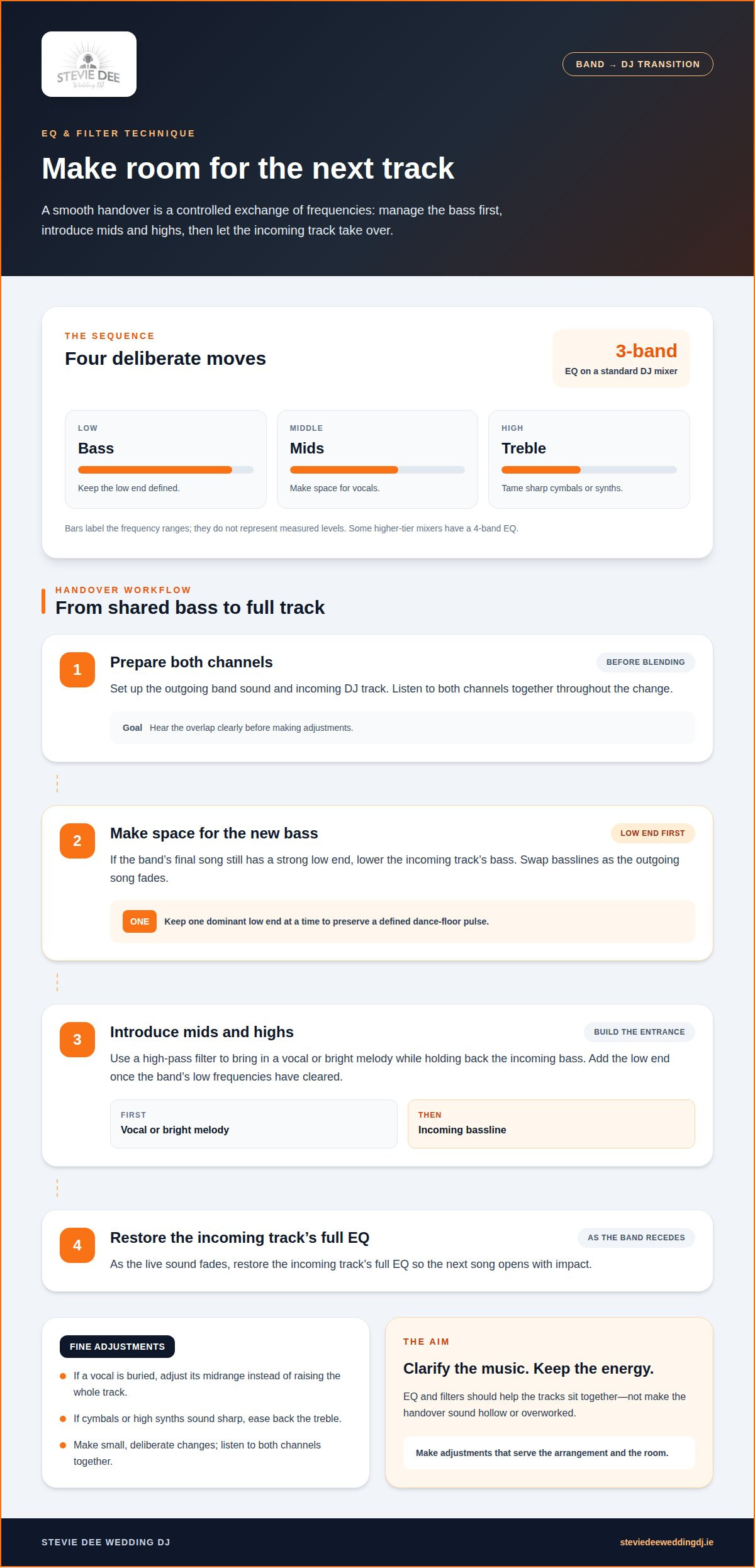
A standard DJ mixer typically has a 3-band EQ for adjusting bass, midrange and treble. Some higher-tier mixers have a 4-band EQ, giving the DJ another frequency range to shape. EQ matching means adjusting two songs’ equalisation so their frequencies sit together rather than compete. During a band-to-DJ handover, that helps the incoming track feel like a natural addition, not a sudden wall of sound.
Start with the bass. If the band’s final song still has a strong low end, bringing in the next track’s full bass at once can muddy the mix. The DJ can lower the incoming track’s bass, then swap basslines as the outgoing song fades. This keeps one dominant low end at a time and preserves the dance-floor pulse. The right moment depends on the arrangement, especially when the outgoing bass stops or changes.
Next, shape the incoming track’s mids and highs. A high-pass filter can introduce these frequencies gradually while holding back the low end. For example, the DJ might bring in a vocal or bright melody first, then add the incoming bass once the band’s low frequencies have cleared. This staged entrance gives listeners a recognisable detail before the next track takes over.
Use mixer EQ and filters in small, deliberate adjustments. If the incoming vocal sounds buried, adjust its midrange rather than raising the whole track and making everything louder. If cymbals or high synths sound sharp against the live mix, ease back the treble. Listen to both channels together throughout the transition. Adjustments should clarify the music and maintain its energy, not make the handover sound hollow or overworked.
For a clean sequence, prepare the outgoing and incoming channels, make space for the new track’s bass, then blend its mids and highs. As the band’s sound recedes, restore the incoming track’s full EQ. This controlled exchange keeps the low end defined and lets the next song open with impact.
4. Musical phrasing
Dance music commonly moves in phrases of 16 or 32 beats. Each phrase forms a musical unit, often ending with a change such as a new vocal, drum pattern or drop. For a seamless handover, the DJ can align the incoming track’s phrase opening with a meaningful point in the band’s final song. That timing helps the change feel intentional, even when the songs differ in style.
Count phrases from a clear musical landmark, such as the first beat after an intro or the start of a chorus. If the DJ track’s drop arrives after a 32-beat buildup, cueing that buildup at the right moment lets the drop land as the band reaches its ending. Starting halfway through the phrase can make the incoming arrangement feel out of step, even when the beats match.
A practical approach is to identify the band’s final musical phrase, choose the DJ track’s entrance point, then align their phrase boundaries. For example, if the band finishes with a repeated chorus, the DJ can introduce a restrained intro underneath and bring in the fuller section after the last vocal line. Follow the arrangement, not just the beat count.
A brief pause before the next track drops can create a dramatic change in energy, but it needs precise timing. A pause before the band’s final note resolves can feel accidental, while a gap that lasts too long may drain dance-floor momentum. Use the ending’s natural release, then place the drop where guests can feel the next pulse arrive.
Musical phrasing is the detail that turns a technically clean mix into a convincing live-to-DJ moment. Pre-Reception Music can also help establish the event’s musical direction before the dance-floor handover. Plan your celebration’s musical flow with the right timing, energy and atmosphere.
Stevie Dee Wedding DJ
Stevie Dee Wedding DJ can carry the celebration from the band’s final song into a full night of dancing. A Full Night Wedding DJ is a natural next step when you want the music to continue after the live performance, with track choices shaped around the atmosphere you want for your wedding.
Musical phrasing, energy and timing all matter, as does clear coordination. A Professional MC Service can help the evening flow, keeping guests informed as the celebration moves from one part to the next. For weddings abroad, a Destination Wedding DJ brings the DJ service to your chosen destination.
If you’re planning the music and flow of your wedding celebration, contact Stevie Dee Wedding DJ to discuss your plans.
Make the handover part of the celebration
The moment the band finishes can set the tone for what comes next. Give the handover the same care as the rest of your wedding plans, so it feels like a natural continuation of the celebration rather than a pause. A seamless band-to-DJ transition helps keep the room connected as the evening finds its next gear.
Stevie Dee Wedding DJ offers a Full Night Wedding DJ for celebrations continuing into the evening, a Destination Wedding DJ for weddings abroad, and a Wedding Celebrant Service for couples planning their ceremony. Choose the service that fits your plans and the atmosphere you want to create.
Ready to shape the next part of your celebration? Contact Stevie Dee Wedding DJ to talk through your wedding plans. The right music and thoughtful timing can make the handover feel like the start of something brilliant.
Frequently Asked Questions
How do you transition seamlessly from a live band to a DJ at a wedding or event?
Plan the handover as part of the evening’s running order. Agree who will give the cue and where the DJ should begin. For a seamless band-to-DJ transition, the band can finish its last song cleanly while the DJ prepares the next selection. Avoid competing announcements and make sure guests know whether the dancing is continuing or the programme is changing.
How can the DJ match the band’s final song and musical style?
The DJ can choose an opener that reflects the final song’s mood, audience and lyrical tone, rather than relying on genre alone. If the band ends with a joyful singalong, a recognisable party track can keep guests involved. After a reflective song, a gentler opening can build energy naturally. Sharing the band’s set list and the preferred atmosphere ahead of the event helps guide those choices.
Comments