
Creating a Unique Sound for Your Wedding: A Practical Guide
What if your wedding soundtrack could tell your story and still get guests of every age onto the dance floor? Creating a unique sound for your wedding isn’t about choosing a favourite song for every moment. It’s about giving the day a musical thread, from guests arriving to the last dance, while making room for the songs that mean the most to you.
Your personal favourites may not all suit the same moment, and you and your guests may have different tastes. A thoughtful plan brings those sounds together without making the celebration feel like a generic playlist. Match music to the mood of each part of the day, then let the energy build naturally.
This guide will help you choose songs that reflect your story, shape a smooth musical journey and keep the evening lively. You’ll find practical ways to balance different tastes, plan music for key moments and brief a DJ and MC. Stevie Dee brings DJing, hosting and atmosphere together, with over 20 years of professional entertainment experience.
Table of Contents
What Does Creating a Unique Sound for Your Wedding Actually Mean?
Creating a unique sound for your wedding means shaping a musical thread that feels like the two of you, rather than collecting songs you both like. Your soundtrack can bring shared memories, cultural influences and different sides of your personalities into one celebration, while changing pace as the day unfolds.
A personal playlist is a collection of songs you love; a coherent wedding soundtrack connects those songs to the people, mood and moments of the day. That leaves room for variety. A gentle acoustic song, a family favourite and an upbeat dance track can all belong if each choice helps create the feeling you want.
Which moments should your wedding soundtrack connect?
Think of the day as a sequence, with music helping guests move from one moment to the next. Ceremony music can set a meaningful tone, pre-reception music welcomes guests, and selected tracks can ease transitions into the meal, speeches and evening celebration. The traditional wedding music structure offers a useful starting point for ceremony moments such as the prelude, processional and recessional.
The mood can shift without losing its personal thread. Soft instrumentals or familiar songs can create a calm arrival, while music with more pace and energy can build towards the evening. No particular genre is essential. The connection comes from choices that feel right to you and work together across the day.
How can music tell your story as a couple?
Start with the songs that carry a story. A track might remind you of an early date, a shared journey, a family member or a milestone you reached together. Cultural influences and music loved by the people closest to you can also give the soundtrack extra meaning.
Choose a few emotional anchors rather than assigning a favourite song to every moment. For each one, note what it brings to mind or how you hope it will make you feel. That context gives your music plan a clear purpose while leaving space for the day to flow naturally. The aim isn’t to impress guests with unexpected choices. It’s to make the celebration sound like you, then invite everyone into it.
How to Turn Your Story and Music Tastes into a Wedding Sound
Once you know the feeling you want your wedding to carry, turn that instinct into a clear music brief. Start with what you both enjoy, what matters personally and what you’d rather not hear. You don’t need to agree on every artist or genre. The aim is to give your DJ enough context to connect your tastes and shape the soundtrack around the day.
How do you find the musical overlap between you?
Make your first lists separately. Each of you can note favourite genres, artists, eras and songs, along with styles you’d prefer to avoid. Compare the lists and look beyond matching titles. One of you might love soul and the other indie, but both may be drawn to warm vocals, a strong rhythm or music that feels nostalgic.
Choose a small number of must-play songs and add a line about each: who it reminds you of, why it matters or what mood it creates. That detail gives your DJ a useful starting point, especially if your tastes differ. It also separates songs that are important to you from those that simply fit a general style.
What should you include in a wedding music brief?
Keep the brief organised and easy to use. For each part of the day, describe the atmosphere you’re hoping for, then list the tracks or musical preferences that support it. A simple format could include:
Ceremony: meaningful choices and the mood you want to create.
Drinks reception: preferred genres, artists or sounds for welcoming guests.
Evening: must-play songs, styles to include and do-not-play requests.
Mark each request as fixed or flexible. A song for a special moment may be non-negotiable, while a preferred genre can guide selections without dictating every track. This balance helps your DJ honour the personal details and still respond to the atmosphere in the room.
A useful wedding music brief connects each selection to its purpose, whether that’s marking a memory, setting a mood or bringing guests together. That’s the heart of creating a unique sound for your wedding: your choices lead the way, and the brief leaves room for the celebration to feel alive. Stevie Dee’s full-night DJ and MC service carries those choices through the evening, with music and hosting shaped around your plan.
Personal Playlist or DJ Curation: What Creates a Better Wedding Sound?
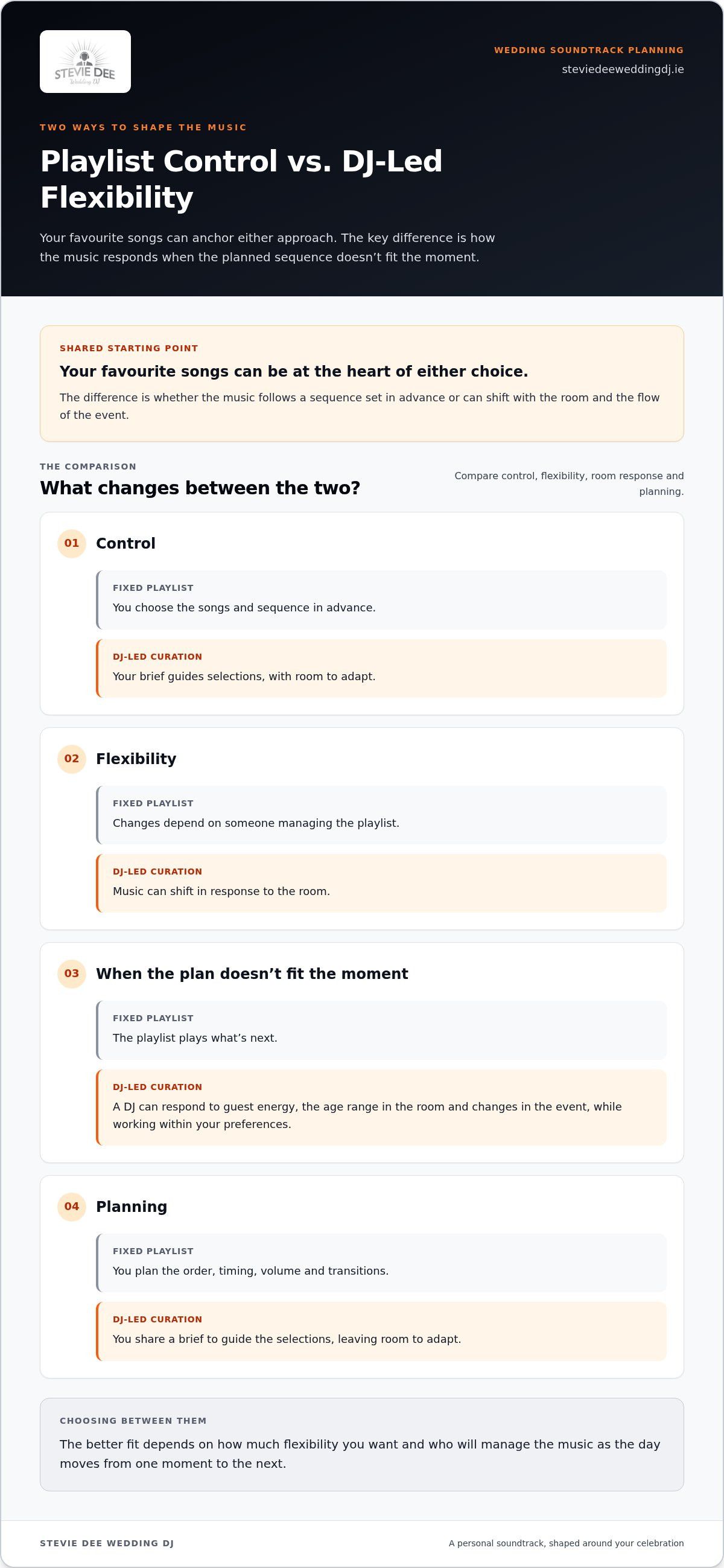
A fixed playlist gives you close control over the songs and their order. DJ-led curation keeps your choices at the centre while allowing selections to shift with the room. The better fit depends on how much flexibility you want and who’ll manage the music as the day moves from one moment to the next.
Your favourite songs can anchor either approach. The difference is what happens if the planned sequence doesn’t fit the moment. A playlist plays what’s next; a DJ can respond to guest energy, the age range in the room and changes in the event, while working within the preferences you’ve shared.
When does a carefully planned playlist work well?
A playlist can suit couples who want to select every track and keep the sequence predictable. It still takes practical planning: decide where each section starts and ends, how volume should change, and what happens during pauses or transitions. If the mood shifts, a fixed sequence may not adapt easily. Someone also needs to manage playback rather than leave the music unattended.
How can a DJ keep the music personal and responsive?
A DJ uses your music brief as a guide, not a script to follow blindly. If guests respond warmly to a particular sound, the next choice can build on that energy. If the floor needs a change of pace, the music can move in another direction while respecting your do-not-play requests. Guest requests can be weighed against your preferences rather than automatically taking over the soundtrack.
That responsiveness helps the evening feel connected instead of stop-start. Stevie Dee brings DJ and MC services together, using your preferences to shape the music while supporting transitions and announcements. For couples creating a unique sound for your wedding, the choice isn’t between personal songs and a lively room. It’s whether you’d like to manage each selection yourself or leave room for a DJ to respond as the celebration unfolds.
How to Create Your Wedding Sound: A Practical Planning Sequence
A simple plan makes it easier to carry your musical identity across the day without choosing every track in advance. Use this sequence to turn your ideas into a clear guide for your DJ, while leaving enough flexibility for the celebration to unfold naturally.
Define the mood. Choose a few words for the atmosphere you want, such as intimate, joyful, relaxed or high-energy.
Gather meaningful songs. Collect personal favourites, family traditions and music connected to important memories. Add a short note explaining why each matters.
Map the moments. Mark the ceremony, guest arrival, drinks reception, key transitions and evening celebration. Choose representative songs or styles for each, rather than filling every slot.
Brief your DJ. Organise the selections by moment. Clearly mark must-play songs, do-not-play requests and where you’re happy to leave room for the DJ’s judgement.
Review the plan. Check that the musical journey feels balanced, reflects both of you and allows for family traditions without letting outside requests overshadow your preferences.
How should you match songs to moments in the day?
Begin with the ceremony and guest arrival, then consider how the mood will shift towards the evening celebration. Give each choice a purpose: a welcoming track, a reflective moment, a smooth transition or an energy lift. A family song or cultural tradition can have a special place without defining the whole soundtrack. Keep timings flexible, since speeches, arrivals and other parts of a live event can run differently from the plan.
For ideas on building the evening’s momentum, continue with our guide to keeping the wedding dance floor full.
How do you share your plan with your DJ?
Send a concise, organised brief with music grouped by moment. Mark essential selections and do-not-play requests clearly, and add a short note about the story or mood behind especially meaningful tracks. Share the plan in time for preparation, then discuss where precision matters and where the DJ can adapt to the room.
That balance is central to creating a unique sound for your wedding: personal choices set the direction, while a little breathing room helps the music fit the real pace and energy of the day. Stevie Dee’s full-night DJ and professional MC service brings your selections together with the event’s flow. Plan your wedding music with Stevie Dee.
How a Wedding DJ and MC Bring Your Unique Sound to Life
A well-planned soundtrack still needs to work in a real room, where the schedule can shift and guests respond in their own way. A DJ can use your music brief as a guide, adjusting selections and pacing as the atmosphere changes while keeping your must-play and do-not-play preferences in view. That blend of preparation and responsiveness helps personal music feel connected to the celebration.
How do DJ and MC roles support a seamless musical journey?
The DJ shapes the musical flow by selecting and mixing tracks to suit each moment. The MC supports the event flow with announcements that help guests understand what’s happening next. These roles work together: a clear introduction can lead naturally into a meaningful song, while a well-timed transition can move the celebration forward without making the music feel interrupted.
Your brief can guide both the song choices and the style of hosting. If you prefer a relaxed, understated feel, announcements can stay warm and concise. If you want a more energetic evening, the hosting can help build anticipation around key moments. With one professional supporting both DJ and MC duties, the music and transitions can follow the same plan. Stevie Dee brings over 20 years of professional entertainment experience to weddings, connecting couples’ musical choices with the changing energy of the room.
How does a tailored sound setup support the atmosphere?
Sound and lighting influence how the celebration feels in its setting. A ceremony, drinks reception and evening dance floor may each call for a different atmosphere, so the setup can be tailored to the venue and the style you want. The aim is to support the occasion, from comfortable listening during quieter moments to a more celebratory feel as the evening gets underway, rather than relying on one look or mood for every space.
For more ideas on shaping the evening, explore our guide to keeping the wedding dance floor full. Creating a unique sound for your wedding is about more than choosing tracks: it’s the combination of personal music, thoughtful hosting and an atmosphere suited to the venue.
Stevie Dee’s full-night wedding DJ and professional MC service, alongside bespoke sound and lighting, brings those elements together around your plan. Explore how your music brief can guide the celebration from one moment to the next.
Bring Your Wedding Sound Together
A memorable wedding soundtrack isn’t simply a list of favourite songs. It’s a musical journey that reflects your story, connects each part of the day and leaves room for the celebration to find its own rhythm. Choose a few meaningful anchors, map them to key moments, then give your DJ clear preferences and space to respond to the room.
That’s the heart of creating a unique sound for your wedding: personal choices, thoughtful transitions and an atmosphere that feels right for you and your venue. Stevie Dee brings over 20 years of professional entertainment experience to full-night DJ and MC services, with bespoke sound and lighting tailored to the venue.
Ready to bring your music plan to life? Explore Stevie Dee’s wedding DJ and MC services and take the next step towards a celebration that sounds unmistakably like you.
Frequently Asked Questions
How do we make our wedding music feel personal?
Choose songs connected to your memories, people and shared influences, then match them to moments where their meaning can shine. Creating a unique sound for your wedding isn’t about filling the day with personal favourites; it’s about giving those choices a purpose. Pick a few emotional anchors, note why they matter, and build a musical thread around them that reflects your personalities and the atmosphere you want.
How many songs should we choose for our wedding?
Choose enough songs to identify the moments and moods that matter, rather than trying to programme every track yourselves. The number depends on your schedule, the parts of the day that need music and whether you’re planning a fixed playlist or DJ-led curation. Start with ceremony selections, meaningful must-plays and a few styles you enjoy. Your DJ can use that direction to shape the rest of the soundtrack.
Can a wedding DJ play our own playlist?
Yes, your chosen songs can form an important part of the music plan. Share the tracks that are essential to you, along with any do-not-play preferences and notes about the mood or memory behind a song. A DJ can use those choices as anchors while shaping the wider musical flow around them. This keeps the soundtrack personal without requiring you to decide every selection in advance.
What if we have different music tastes as a couple?
Different tastes can add character to your wedding soundtrack. Each of you can first list favourite artists, genres and eras, then look for common ground in mood, rhythm or shared memories. You might not love the same styles, but you may both want music that feels joyful, nostalgic or relaxed. Choose a few important songs for each of you and explain their meaning in your music brief.
How do we balance our favourite songs with music guests will enjoy?
Use your favourite songs to give the soundtrack its identity, then allow variety and pacing to make it welcoming for guests. Share the genres and moods you enjoy, your must-play tracks and clear do-not-play requests. A DJ can respond to the room while staying within those preferences, helping the music connect different generations and tastes without letting guest requests take over the celebration.
When should we give our wedding DJ our music preferences?
Share your preferences once you’ve identified the key moments and the general atmosphere you want, so the music plan can take those details into account. Include meaningful songs, preferred genres, must-play selections and any do-not-play requests. Add brief notes about why particular tracks matter. Review the plan with your DJ as the day takes shape, especially where you want specific choices or flexibility.
Can a wedding DJ adapt the music during the reception?
Yes. DJ-led music can respond to the energy in the room as the reception unfolds. Your DJ can use your brief as a guide, notice which sounds guests are responding to and adjust the pacing while respecting your preferences. That flexibility can help transitions feel natural and keep the evening moving. Stevie Dee’s full-night DJ and MC services bring music and hosting together around your wedding plan.


Comments