
How to Include Guests in Your Wedding Ceremony Through Readings and Rituals
Your guests can help shape the ceremony, not just witness it. A celebrant-led ceremony can give three people meaningful roles as readers, with one reading at the opening, one in the middle and one at the end. That’s one simple way to decide how to include guests in a wedding ceremony: invite loved ones to share wishes, take part in a ritual or respond together to your vows.
It’s natural to want the ceremony to feel personal while keeping participation comfortable for everyone. A thoughtful role can bring family and friends closer to the moment without making it feel like a performance.
Here are practical ideas for readings, ring-warming, shared rituals and collective promises, along with ways to make each part clear and meaningful. Choose the moments that suit your relationship, your guests and the atmosphere you want to create.
Table of Contents
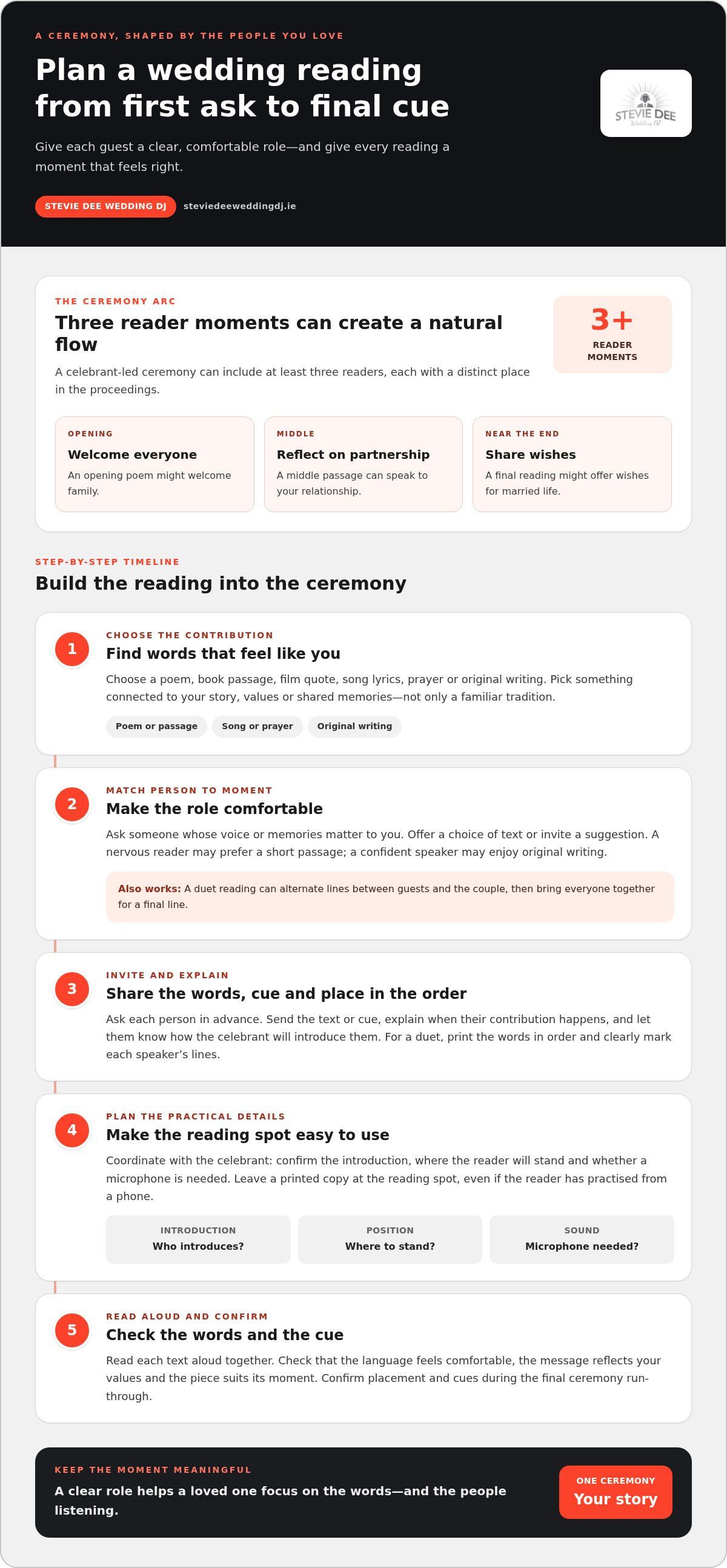
1. Asking a guest to give a reading
Guests can take part by reading a poem or passage, singing a chosen song or offering a prayer that suits your ceremony. Ask each person in advance, share their text or cue, and have the celebrant introduce their contribution. These options show how to include guests in a wedding ceremony, whether they speak alone or join a shared reading.
A celebrant-led ceremony can include at least three readers: one at the opening, one in the middle and one near the end. This gives each contribution its own moment without crowding the ceremony. An opening poem might welcome family, a middle passage could reflect on partnership, and a final reading might offer wishes for married life.
Choose words that connect with your story, rather than relying only on familiar wedding traditions. A guest could read a poem, a book passage, a film quote, song lyrics or original writing. For instance, a sibling might share an extract that recalls a favourite family gathering, while a friend could write a few lines about what makes your relationship distinctive.
Ask someone whose voice or memories matter to you, then offer a choice of text or invite a suggestion. A loved one who feels nervous may prefer a short passage, while a confident speaker might enjoy reading original writing. Tell each reader where their contribution falls in the ceremony order, and share the final wording well before the day.
A duet reading lets the couple and guests alternate lines, creating a shared exchange rather than a solo speech. Print the words in reading order and clearly mark each speaker’s lines. For example, a guest can read a line about trust, followed by one partner’s response and then the other’s. A final line can bring everyone together.
Plan the practical details with the celebrant. Confirm how the reader will be introduced, where they’ll stand and whether they’ll use a microphone. Leave a printed copy at the reading spot, even if the guest has practised from a phone. These steps help the reader focus on the words and the people listening.
When deciding how to include guests in a wedding ceremony, read each chosen text aloud together. Check that the language feels comfortable, the message reflects your values and the piece suits the moment. A thoughtful reading can honour loved ones while celebrating the joining of your lives and families. Confirm the cue and placement during your final ceremony run-through.
2. Inviting friends and family to participate in the ceremony
Give friends and family roles that feel personal, rather than asking everyone to perform in public. Guests can carry meaningful objects, enter together, contribute to a ritual or join a shared response. For guests who prefer not to speak, offer a quiet role: they might add sand to a vessel, place a rose or take part in a group entrance.
At an Irish wedding ceremony, participation can reflect your families’ heritage, beliefs and shared memories. One couple might honour Polish and Greek heritage through crowns and bread blessings. Choose traditions that matter to you, explain their meaning in the programme and make sure each participant knows what to do.
An aisle entrance can include a parent, both parents, another loved one or no escort at all. You can also invite parents or significant family members to enter and take their seats before the wedding party and couple. This gives those guests a visible role while keeping the couple’s entrance distinct.
Invite someone personally and explain the role, timing and practical steps. For example, you could say, “Would you bring the family ribbons forward after the welcome? You’ll hand them to us at the front.” Tell guests whether their role involves walking, speaking or handling an object. Explain any cultural practice simply so friends understand what the moment represents.
There’s no fixed number of roles that suits every ceremony. Choose participants based on the space, the flow of the ceremony and who has a genuine connection to each role. A close friend might carry a family keepsake, while relatives from both sides could take part in a shared ritual. Keep each contribution clear, and avoid assigning a role solely to stop someone feeling left out.
A sand ceremony offers a visual way to represent the joining of lives and families. Give each participant a container of sand, then pour the different colours into one vessel. Children can choose their colours during planning, and relatives can gather sand from a beach that holds special family memories. The layered result becomes a shared keepsake from the ceremony.
Another option is a unity candle ceremony involving four people: the couple and one representative from each family. Each family representative lights one individual candle, making both families part of the moment. A celebrant can help arrange the order and explain each role. A Wedding Celebrant Service can shape these elements into a clear, personal ceremony sequence.
3. Ring-warming and guests’ wishes
A ring-warming ceremony, also called a blessing of the rings, gives guests a quiet way to share affection with the couple. The rings pass from guest to guest, with each person holding them briefly and thinking of positive wishes before passing them on. It’s a meaningful ritual for including loved ones who prefer a gesture over speaking in front of everyone.
For a civil wedding in Ireland, treat ring-warming and spoken wishes as personal ceremony elements, and agree on their timing with the solemniser conducting the ceremony. Keep the formal solemnisation distinct from these contributions so guests understand when the personal ritual begins and ends.
Plan the route before the ceremony. The rings can move along a row, through selected seats or between guests chosen from each side of the family. Tell participants in advance that they can take part silently, and explain where to pass the rings next. If the rings travel through the full room, allow enough time for each guest to hold them without rushing.
Secure the rings before they begin their journey. Tie them to a ring cushion or place them in a small box to make them easier to pass and less likely to fall. Ask a trusted person to start the warming and show the next guest how to pass the cushion or box. The couple can receive the rings at the front when the ritual ends.
Consider the guest count when choosing the format. With more than 25 guests, designate seats for the people you want to participate, rather than expecting the rings to travel through the entire room. This keeps the moment focused and makes the timing easier to manage. For a larger gathering, selected representatives can offer a blessing on behalf of their families.
Guests can also share short spoken wishes. A ceremony might include four or five Wishing Words, each offered as a brief blessing for the couple. Ask the officiant to explain when guests may share a wish, and tell everyone beforehand that speaking is optional. One guest might wish for patience, while another shares a hope for laughter in married life.
Make the invitation specific: explain the gesture, where it falls in the ceremony and whether guests will speak. A favourite reading or personal blessing can feel intimate, but an open invitation to speak may extend the ceremony. Choose the approach that suits your guests, then give the officiant clear cues. This preparation helps every warming, blessing and wish feel considered.
4. Collective responses to wedding vows
A shared response can make your vows feel supported by the people present. The officiant can invite guests to answer together after a short prompt, creating a clear moment without asking anyone to speak alone. Agree on the wording beforehand, print it in the ceremony programme and let guests know they can remain silent if they prefer.
Keep the response brief and connected to your promises. For example, the officiant might ask guests to support the couple as they build their life together, then invite a collective reply. Choose words that feel natural to your families, and practise the cue with the officiant so guests know when to respond.
An oathing stone offers a quiet ritual tied directly to the vows. Children can choose the stone and hand it to the couple during the ceremony. The couple then hold the chosen stone in clasped hands while reading their vows, symbolically setting those promises in stone. Select a smooth, comfortable stone that’s easy to hold.
Make the stone meaningful by choosing one connected to a shared place, such as a beach where your family spent time together. Explain its significance in the ceremony programme, or ask the officiant to introduce the ritual. If children are involved, tell them when to come forward and where to stand. A simple cue helps them feel prepared.
Guests who cannot be present can still contribute a personal message. Invite an absent loved one to write a short wish, then ask the officiant or a trusted family member to read it before the vows. You could also include their words in the programme. This brings their support into the room without suggesting they’re physically attending.
For someone who is no longer with you, a written message or a stone connected to a shared memory can honour their place in your story. Keep the tribute personal and concise, perhaps naming a favourite family tradition or a value they taught you. The couple can hold the stone during their vows as a quiet acknowledgement.
Before the ceremony, confirm the sequence with the officiant: introduce the ritual, invite the child forward, receive the stone, then begin the vows. Tell each guest what their role involves and where it fits. Whether guests respond together or contribute through an oathing stone, a clear cue makes the moment feel lovely, considered and connected to your promises.
A couple can use a stone from a beach where a deceased loved one’s ashes were scattered to include that person symbolically in the ceremony. This gives the stone a direct connection to the person being remembered while keeping the tribute quiet and personal. A family can also collect sand from a beach that holds special memories for use in a sand ceremony. This shared ritual brings those memories into the ceremony in a tangible way. Briefly explain the significance in the programme or ask the officiant to introduce it, so guests understand why the stone or sand is included. Choose the approach that feels comfortable for your family and fits naturally with the vows.
5. Inviting guests to pledge their ongoing support
A Pledging Support ceremony turns guests’ presence into a promise of ongoing care. After the couple exchange wedding rings, the officiant asks guests to promise to love, support and encourage them. Guests answer together, “We promise.” This brief exchange welcomes family and nearest and dearest into the couple’s next chapter.
Tell guests about the pledge before the wedding day. Include the response in the ceremony programme or explain it in a message beforehand. For example, let them know the officiant will ask a question after the ring exchange, followed by a shared reply. A clear preview helps guests understand the moment and join in confidently.
Work with the officiant to shape wording that sounds natural for your family. Keep the promise focused on practical support, rather than a grand statement guests may find hard to own. The officiant might ask whether everyone will encourage the couple through change, celebrate their joys and offer kindness during difficult moments. Guests then respond with the agreed words.
Consider how the pledge will sound in the room. A collective “We promise” is easy to remember and lets guests speak as one group. The officiant should pause after asking the question, giving everyone time to respond together. A clear voice and unhurried cue help guests follow the exchange.
Make the invitation meaningful rather than compulsory. Tell guests they’re being asked to express support, not to take responsibility for the couple’s choices. If someone feels uncomfortable speaking aloud, they can listen respectfully while others respond. This keeps the promise warm and welcoming without putting anyone on the spot.
For a personal touch, connect the pledge to the couple’s values. If generosity matters to you, ask guests to promise encouragement and thoughtfulness. If family connection is central, include a line about making space for both families. Keep the request concise, then let the shared answer carry the feeling. The result can be a lovely moment of belonging.
Before the ceremony, confirm the sequence with the officiant: the ring exchange, the invitation, the question and the response. Make sure the programme shows the exact words guests will say. To plan a ceremony with clear, meaningful moments, shape your wedding ceremony with expert support.
Advance notice helps guests understand why they’re being invited to take part, rather than encountering the request without context. The couple can explain briefly that the pledge is a shared expression of care for their life together. This keeps the emphasis on encouragement and connection, while making clear that guests aren’t being asked to direct the couple’s decisions. A simple explanation can also make the response feel sincere rather than like an unexpected formality.
When preparing that explanation, use language that reflects the couple’s intentions and suits the ceremony’s tone. The officiant and couple can review the invitation together, ensuring it describes the moment plainly and makes the shared reply easy to recognise. If the wording changes during planning, update the advance message and programme so guests receive consistent guidance. Thoughtful notice lets guests decide how they wish to participate and helps keep the pledge welcoming.
Stevie Dee Wedding DJ: Full Night Wedding DJ
Stevie Dee Wedding DJ can bring your ceremony roles and evening celebration together with a Full Night Wedding DJ. A Professional MC Service can guide guests through key moments, including readings, shared responses and transitions between parts of the day. If you want one person to lead the ceremony itself, a Wedding Celebrant Service can help shape its flow around your chosen rituals and promises. For celebrations abroad, a Destination Wedding DJ can support your entertainment plans.
Consider these services when you want confident hosting and music that fit the atmosphere you’re creating. For a personal conversation about your wedding plans, contact Stevie Dee Wedding DJ or visit steviedeeweddingdj.ie.
Make your ceremony feel unmistakably yours
The most meaningful choice is the one that helps your loved ones feel welcomed, connected and part of the moment. As you decide how to include guests in a wedding ceremony, think beyond the schedule. Choose roles that express your values and let your guests contribute in ways that feel comfortable to them.
Then consider how the ceremony’s voice and atmosphere will carry those choices. Stevie Dee Wedding DJ offers a Wedding Celebrant Service, Full Night Wedding DJ and Destination Wedding DJ to help couples shape ceremony and entertainment plans around their celebration. Whether you’re planning in Ireland or abroad, get in touch to discuss which service suits your plans.
Contact Stevie Dee Wedding DJ to discuss your wedding. Your ceremony can feel personal, welcoming and full of shared joy.
Frequently Asked Questions
What are meaningful ways to involve guests in a wedding ceremony?
Give guests a role that reflects a shared memory or connection with you. A friend who introduced you could welcome guests, while a relative might present a family heirloom during the ceremony. You could also invite guests to write private wishes on cards for you to read later. Give each person clear instructions and let them know they can decline without affecting your relationship.
How can couples include guests in a unity ceremony or ring-warming ritual?
Make the ritual easy to follow by asking a trusted guest to coordinate each handover. For ring-warming, they can guide the rings along an accessible route and return them to the couple at the right cue. For a unity ritual, invite chosen guests to contribute a small element, such as a ribbon or coloured sand. Explain the sequence beforehand so the moment flows smoothly.
How can children and family members be included in the wedding ceremony?
Match each role to the child’s comfort and the family member’s relationship with you. A child might carry a sign, bring a family keepsake forward or stand beside a parent during the vows. An adult relative could welcome arriving guests or help younger participants find their places. Explain each task simply, and arrange for a trusted adult to support children if they become shy.

Comments