
How to Trust Your Wedding Suppliers and Check Their Work
Beautiful wedding photos are a starting point, not proof that a supplier’s work still reflects what they offer today. To learn how to trust your wedding suppliers, ask when the photos were taken, check the supplier’s contact details, and read reviews across platforms. Then consider whether their style and approach feel right for you.
It’s natural to want reassurance before putting important parts of your day in someone else’s hands. A few thoughtful checks can help you feel confident without turning planning into an investigation. Trust works best when your preferences and a supplier’s expertise both have room.
This guide explains how to assess photos, business details and feedback, what to make of a venue’s recommended suppliers, and how to share your priorities clearly. You’ll also learn how to give experienced professionals room to shape the details, so the celebration feels unmistakably yours.
Table of Contents
1. Checking supplier contact details and business presence
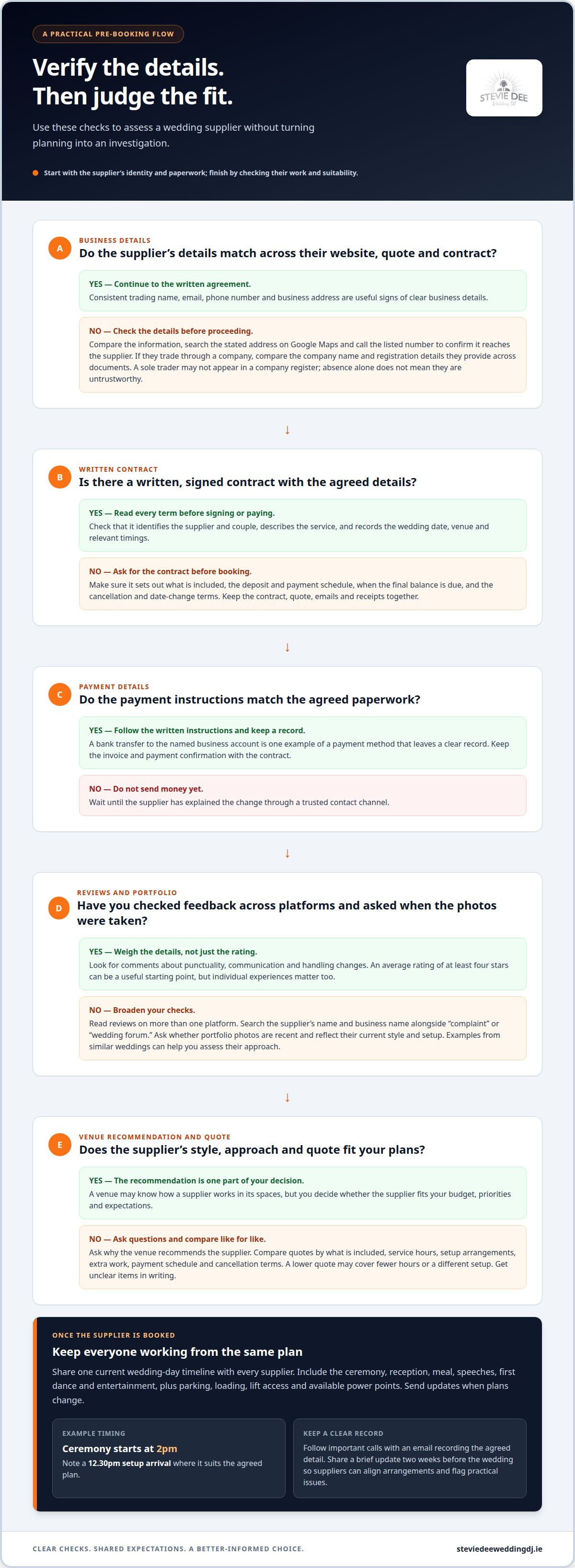
Start your wedding planning checks by comparing the supplier’s trading name, email address, phone number and business address across their website, quote and contract. Search the stated address on Google Maps, then call the listed number to confirm it reaches the supplier. If they trade through a company, compare the company name and registration details they provide across their documents. A sole trader may not appear in a company register, so absence alone doesn’t mean a supplier is untrustworthy. Look for consistent, clear details and ask for an invoice or receipt that identifies the business you’re paying.
Ask for a written, signed contract before booking. It should identify the supplier and couple, describe the agreed service, and record the wedding date, venue and relevant timings. It should also set out what’s included, the deposit and payment schedule, when the final balance is due, and the cancellation and date-change terms. Read everything before signing or paying, and keep the contract, quote, emails and receipts together. These records make it easier to resolve misunderstandings about the agreed arrangements.
Use a payment method that follows the supplier’s written instructions and leaves a clear record, such as a bank transfer to the named business account. Keep the invoice and payment confirmation with your contract. If the account details differ from the agreed paperwork, don’t send money until the supplier has explained the change through a trusted contact channel.
Logistics matter just as much as paperwork. Give suppliers one shared wedding-day timeline covering the ceremony, reception, meal, speeches, first dance and entertainment. For example, if the ceremony starts at 2pm, note a 12.30pm setup arrival where that suits the agreed plan. Include the venue’s parking and loading arrangements, lift access and available power points. Send the same current timeline to every supplier, then share updates when plans change. Clear details help the team coordinate arrivals, setup and handovers without last-minute guesswork.
2. Should I trust my venue’s recommended supplier list?
A venue’s recommendations can be a useful starting point. The venue may know how a supplier works in its spaces, but you still need to decide whether their style, approach and quote suit your plans. At a meeting, explain your priorities, budget and expectations clearly. Ask why the venue recommends that supplier and whether the recommendation reflects their work and suitability for your wedding.
Compare quotes on the same basis, not just by the final figure. Check what each includes, service hours, setup arrangements, extra work, payment schedule and cancellation terms. For example, a lower quote may cover fewer hours or a different setup. Ask for unclear items in writing, then compare the details alongside the supplier’s portfolio and communication.
There’s no single deposit amount that applies to every wedding supplier. Check the written contract for the deposit, whether it can be refunded, and the cancellation and date-change terms. Staged payments should be proportionate to the work completed at each stage. Don’t assume a deposit is refundable unless the contract says so.
Communication gives you useful evidence during wedding planning. Notice whether the supplier listens, answers your questions and meets agreed deadlines. A delayed reply may have a reasonable explanation, but repeated missed commitments, vague answers about what’s included, or pressure to pay before reviewing the terms deserve a direct conversation. Put concerns plainly: “Could you confirm what this quote includes before we decide?”
Keep communication focused. Tell suppliers about meaningful changes, such as a revised schedule or venue access plan, but avoid sending daily updates without new information. Follow important calls with an email recording the agreed detail. A brief update two weeks before the wedding gives suppliers a chance to align arrangements and flag practical issues. If you’re shaping the entertainment plans, share your wedding-day priorities clearly so expectations are understood from the start.
3. Checking reviews and recommendations across platforms
Read reviews on more than one platform, then compare the details people mention. Look for comments about punctuality, communication and how the supplier handled changes. An average rating of at least four stars can be a useful starting point, but individual experiences matter too. Search the supplier’s name and business name alongside terms such as “complaint” or “wedding forum” to spot relevant concerns or negative coverage.
Check social media for a consistent picture of recent work and client interaction. A photographer’s posts, for example, can show how they capture different venues and lighting conditions. Notice whether captions explain the context of a wedding and whether the supplier responds professionally to comments. Social media can support your research, but it shouldn’t replace reviews, direct conversations or a clear portfolio.
Ask when portfolio photos were taken and whether they reflect the supplier’s current style and setup. Visiting a wedding venue can help you see how a supplier’s work fits the space, while examples from similar weddings reveal their approach. You don’t always need to meet a supplier in person; relevant examples and a conversation about your plans can offer useful insight before booking.
Ask the venue and suppliers who will interact with you or your guests about insurance covering the services they provide, including errors and accidents. Public liability insurance is especially relevant for suppliers working with guests on the day. Check what the policy covers and whether it applies to the work you’re booking. Wedding insurance is separate, so review its terms for the events and costs it covers.
Data privacy deserves a quick check. A supplier should keep client information secure and not share it without your knowledge. On their website, look for a cookie banner that makes declining cookies easy and clearly visible. Notice whether forms request information relevant to your enquiry, and avoid sharing sensitive details in public social media comments. These checks help you assess not only the supplier’s work, but also how they handle your information.
4. Trusting suppliers’ expertise while stating preferences
A strong booking starts with clarity on both sides. Tell each supplier what matters most, what you want to avoid, and where you’re open to ideas. For example, explain that lively dancing is a priority, but you’d like the evening to feel welcoming to guests of different ages. That gives a professional useful direction without scripting every decision. Knowing how to trust your wedding suppliers means giving them context, not just a list of instructions.
Separate must-haves from nice-to-haves. A family member’s allergy, a meaningful song or a must-have photograph deserves an explicit mention. Share the detail with the supplier responsible and explain why it matters. A photographer can then understand which moment is essential, while a celebrant can account for a personal element in the ceremony.
Then invite professional judgement. Ask the supplier to explain how your preference could work in the space, schedule or setting. If a requested idea conflicts with the room layout or timing, listen to the reason and discuss alternatives. Honest feedback is part of good collaboration, not a rejection of your vision. You still decide which option feels right. Trusting your wedding suppliers also means welcoming informed suggestions while keeping the final say.
A venue visit can make difficult details easier to resolve. Walk through the room with the venue coordinator, florist or relevant supplier to discuss layout, access and ceremony-arch placement. A supplier familiar with your wedding venue may already understand its décor and space, and can coordinate setup directly with the venue coordinator. Use that knowledge to shape a plan that reflects your taste and works in practice.
Keep decisions visible. After a conversation, send a short written summary of agreed preferences, changes and any key personal requirements. For entertainment, that might mean noting the atmosphere you want for the reception and the moments that should take priority. Clear notes give the supplier room to use their expertise while keeping your priorities at the centre. Discuss your wedding-day plans and shape an occasion that feels personal to you.
Stevie Dee Wedding DJ
Stevie Dee Wedding DJ helps couples bring their preferences and trusted professional expertise together for a celebration that feels personal. If you’re planning entertainment or ceremony hosting, explore how a Full Night Wedding DJ, Professional MC Service or Wedding Celebrant Service could fit your day. Share the atmosphere you want, the moments that matter most and any practical details that will shape the plans. Clear conversations help align expectations and give your chosen professionals room to guide the experience.
Whether you’re planning a wedding in Ireland or a destination wedding abroad, choosing the right support starts with discussing what matters to you. Contact Stevie Dee Wedding DJ to talk through your plans.
Make space for the celebration you want
Trust grows when your plans leave room for both personal meaning and professional judgement. As your wedding takes shape, focus on the feeling you want to create for yourselves and your guests. Knowing how to trust your wedding suppliers means being clear about what matters, then letting the right people bring those priorities to life.
For entertainment and ceremony support, Stevie Dee Wedding DJ offers a Full Night Wedding DJ, Destination Wedding DJ and Wedding Celebrant Service. Each can help shape a different part of your celebration around your preferences. Consider which moments you want to feel especially memorable, then start a conversation about the atmosphere and experience you have in mind.
Contact Stevie Dee Wedding DJ to discuss your wedding plans. Your celebration can feel unmistakably yours, with a team that understands what matters to you.
Frequently Asked Questions
Are their photos up to date?
Ask when the images were created and whether they reflect the supplier’s current work and style. Request a recent, complete example rather than judging a single highlight image. For a photographer, look for consistency across a full wedding gallery, including indoor and outdoor scenes. If the sample differs from the images that first appealed to you, ask what has changed since they were taken.
Should I trust my venue’s recommended supplier list?
Use the list as a helpful starting point, not an automatic endorsement. A venue may recommend suppliers because they know the space and its practical requirements, but your priorities still matter. Ask what makes each recommendation suitable for your plans, then consider whether the supplier’s style and communication feel right for you. You can choose from the list or explore options that better match your vision.
What if something goes wrong?
Before booking, ask how the supplier would respond to a problem that could affect your wedding day. For example, discuss illness, travel disruption or rain if their work depends on outdoor conditions. Ask who would contact you, what alternative arrangements might be possible, and how changes would be handled. Clear answers help you understand the plan and decide whether it gives you confidence.
How do I check wedding suppliers’ reviews and references in Ireland?
Search the supplier’s trading name and business name across review platforms, social media and wedding forums. Look for detailed accounts, not just star ratings, and note whether different couples mention similar strengths or concerns. You can also ask the supplier for a reference from a previous couple. Focus on feedback relevant to your plans, such as communication, adaptability or handling a busy schedule.
How do I verify an Irish wedding supplier’s business registration and insurance?
Ask whether the supplier trades as a sole trader or through a company. If they provide company registration details, check that the registered name matches the name on their quote and contract. For insurance, request documentation showing the insured party, cover period and services covered. Check that the documents relate to the work you’re booking, and ask the supplier to explain any terms you don’t understand.
What questions should you ask wedding suppliers before booking?
Ask what the service includes, who will deliver it and what happens if plans change. For example, clarify how the supplier handles schedule updates, venue restrictions or an unexpected issue on the day. Ask what information they need from you and how decisions will be recorded. Their answers can show whether they understand your priorities and have considered the practical details of your wedding.



Comments