
Skip the First Dance: 10 Meaningful Alternatives
What if your wedding reception’s most meaningful moment didn’t involve a solo dance at all? If the thought of being watched on the dance floor makes you tense, you’re not alone. Choosing what to do if you don't want a first dance doesn’t mean giving up a special moment. It means shaping one that feels like you.
You can skip the spotlight without leaving guests wondering what comes next or worrying that family will feel let down. A welcome toast, a group dance, a couple’s quiz or an upbeat song that opens the floor to everyone can make the moment personal, warm and relaxed.
In this guide, you’ll find 10 thoughtful alternatives and practical ways to move smoothly into the evening celebration. We’ll look at options that bring guests together, honour your relationship or get the party started. With a clear plan and a well-timed DJ or MC announcement, the transition can feel natural, and the celebration can keep its energy without asking you to perform.
Table of Contents
You Don’t Have to Have a First Dance: Start With What Feels Right
If the thought of stepping onto the dance floor while every guest watches makes you tense, you’re allowed to feel that way. A wedding reception is a celebration, not a performance, and the first dance is a choice rather than a test of your confidence, commitment or happiness. You can mark the moment without following a format that doesn’t feel like you.
Traditions can give a reception a familiar shape, but they don’t have to dictate every detail. The history of wedding receptions and the first dance offers context for how customs have become part of celebrations. Knowing a tradition’s place in wedding culture doesn’t mean you have to include it. You and your partner decide which moments belong in your day.
Why some couples would rather skip the spotlight
For some couples, the hard part isn’t dancing. It’s being watched. The attention can feel intense, especially when guests gather around the floor and cameras come out. Others may simply not enjoy dancing, or may feel self-conscious moving in front of a crowd. None of these reasons needs defending.
Sometimes the traditional dance just doesn’t suit the couple. You might prefer to welcome your guests, share a moment with family or open the floor so everyone can celebrate together. That preference isn’t a rejection of romance. It’s a way to make the reception feel more personal. If you’re wondering what to do if you don't want a first dance, start with the kind of experience you’d enjoy, rather than trying to talk yourself into the expected one.
What makes an alternative feel meaningful
Meaning doesn’t come from how long a moment lasts or how elaborate it looks. It comes from what it represents to you. A shared song, a few words of thanks, a warm welcome or having loved ones beside you can all mark the start of the evening in a genuine way. The focus can stay on your connection without asking you to dance alone.
Ask each other: “What would we like to remember about this part of the reception?” One of you might want a quiet, intimate moment; the other might want to bring everyone straight into the celebration. Your answer helps you choose a format that suits you both. It also gives your DJ or MC a clear cue, whether that means introducing a song, making a short announcement or inviting guests to join you.
Keep it simple if that’s what feels right. You don’t need a formal replacement or a complicated plan to make the occasion special. A thoughtful choice, shared with the people you love, can be every bit as memorable as a traditional first dance. The aim isn’t to recreate the spotlight in a different form. It’s to mark the start of your celebration in a way that lets you relax, connect and enjoy it.
What a First Dance Does, and What Your Alternative Can Keep
A first dance often serves two purposes. It gives the newly married couple a featured moment, then uses music and movement to signal that the reception is shifting into its next chapter. Guests know to turn their attention to you, and the change in atmosphere can invite them to start celebrating on the dance floor.
Those functions don’t depend on a traditional solo dance. You can create a moment that brings people together, acknowledges your relationship and opens the evening without asking you to perform. Keep the parts that matter and change the parts that don’t.
The moment, the music, and the transition
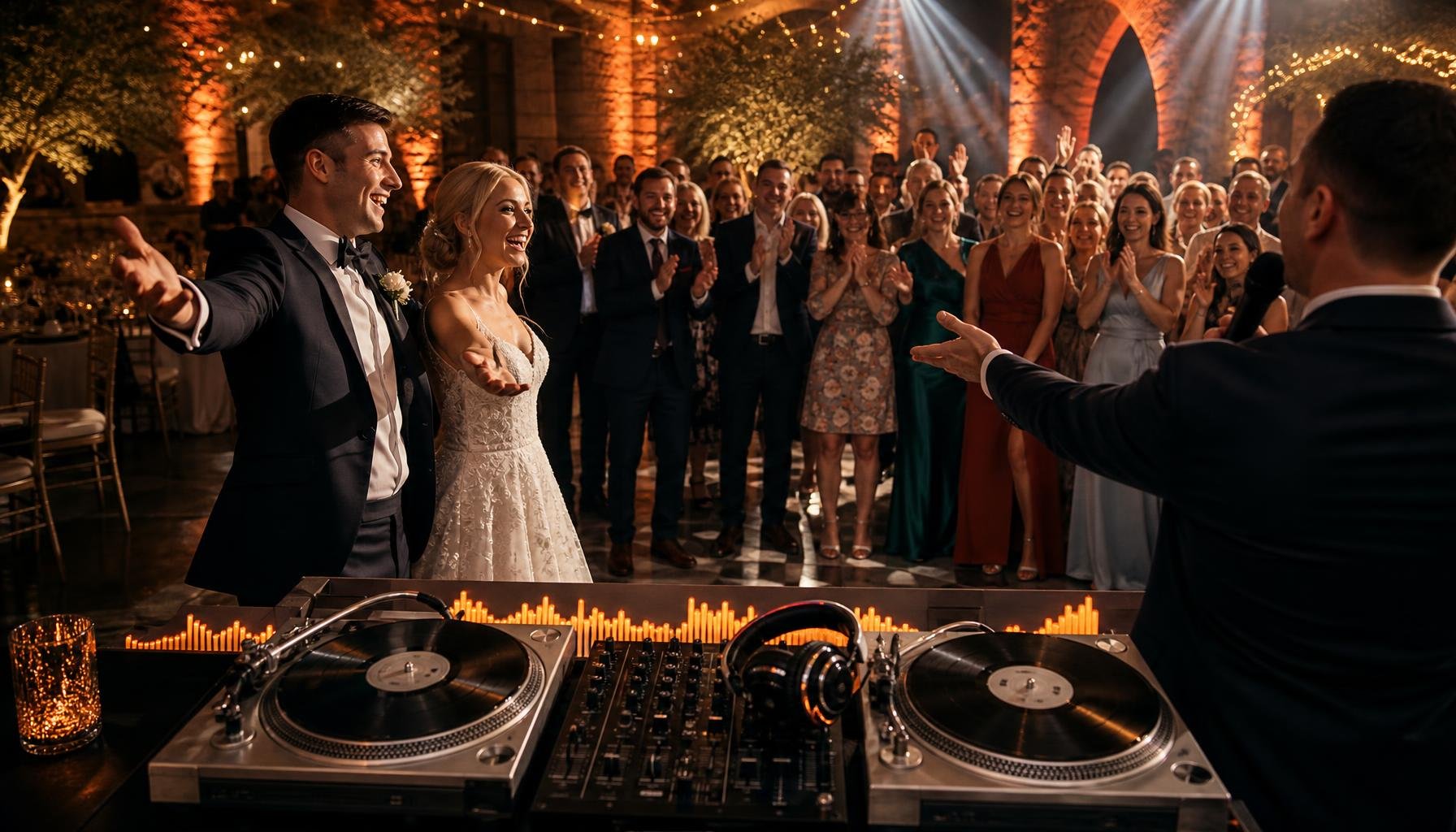
A featured moment gives the room a shared focus. It could be a brief welcome from you, a favourite song played as you greet guests, or an announcement inviting your wedding party to join you. Music can then carry the room from conversation into celebration, whether the first track is gentle and meaningful or lively enough to get guests moving.
Plan what the music and announcement should communicate. A DJ and MC can introduce the moment, cue an agreed song and let guests know what follows. That coordination helps avoid an awkward pause. If you’re considering what to do if you don't want a first dance, decide first whether you want the moment to feel intimate, inclusive or like an immediate launch into the party.
Keep the feeling without copying the tradition
You may want to keep a song that means something to you while changing what happens during it. Play it as you share a toast, invite your wedding party onto the floor, or welcome everyone to join you from the first notes. A meaningful song doesn’t have to be a soundtrack to a dance. It can simply mark the moment and bring your guests into it. For more alternatives to a traditional first dance, explore ideas that put a different spin on the reception ritual.
Keep the spotlight: Share a short moment together, but choose an activity that feels comfortable.
Share the moment: Invite family, friends or your wedding party to join you.
Shift the atmosphere: Use an upbeat song and an open invitation to start the dancing.
Keep it personal: Choose music or words that reflect your relationship, without adding extra production.
The best choice depends on what you want guests to feel and do next. If you want the floor open, make the invitation clear. If you want a quieter moment first, let the music support that mood before the energy builds. Planning the next track and announcement can also help you put ideas from a guide to keeping your wedding dance floor full into practice.
A meaningful alternative can honour your connection, bring guests together and signal that the celebration is underway. Keep the song, change the activity, or invite everyone in. With a clear cue, your moment can feel unmistakably yours and flow naturally into the evening.
10 First Dance Alternatives for Couples Who Prefer a Different Moment
There’s no single right answer to what to do if you don't want a first dance. Choose an idea based on how much attention feels comfortable, whether you want guests involved and how much organising suits you. These options range from a simple music cue to a shared activity, and none requires you to put on a performance.
Low-spotlight options that keep the music
Keep the focus gentle with a meaningful song or a private moment. These choices need little planning and can still mark a clear beginning to the evening celebration.
Play your meaningful song among guests. Let a favourite track play while you stay at your table or mingle. The song marks the moment without gathering everyone around you.
Share a private first dance. Take a few minutes together before the reception or in a quiet moment away from the crowd. It’s a personal alternative, with no audience required.
Give a joint welcome toast. Raise a glass, thank your guests and invite them into the evening. Keep it brief and heartfelt rather than turning it into a formal speech.
Open with a song for everyone. Choose an upbeat track and invite guests straight onto the floor. You can join in or simply enjoy seeing the celebration get underway.
Guest-led moments that bring people together
If you’d like the moment to feel communal, bring in friends or family. These ideas work best with a clear invitation, but guests can take part at their own comfort level.
Invite your wedding party to join you. Start with your closest friends around you, then open the floor to everyone. You share the attention instead of standing alone.
Try a generations dance. Invite married guests to the floor, then have the MC call out wedding anniversaries until the longest-married couple remains. It gives guests a moment in the spotlight instead.
Take a group photo. Gather guests for a lively reception photo, then let the music continue as everyone disperses. It creates a keepsake without requiring anyone to dance.
Invite a song dedication. Ask a few loved ones to choose a track that reminds them of you as a couple. A DJ can cue the selected songs and invite guests to join the floor if they wish.
Simple activities or a private ending
Prefer something playful, or would you rather save a quiet moment for later? These options can be tailored to your guests and your energy, without turning the reception into a staged show.
Play a couple-focused quiz. Ask a few light-hearted questions about your story and let guests guess the answers. An optional Mr and Mrs-style quiz can keep it fun without putting anyone on the spot.
Save a private last dance. After guests have left, share a final song together. It gives you a quiet closing moment instead of a public opening dance.
Pick the idea you can easily imagine yourselves enjoying. A clear music cue and a short MC introduction can help guests understand what’s happening and what comes next, while keeping the moment relaxed and unmistakably yours.
How to Choose and Plan a First Dance Alternative That Feels Natural
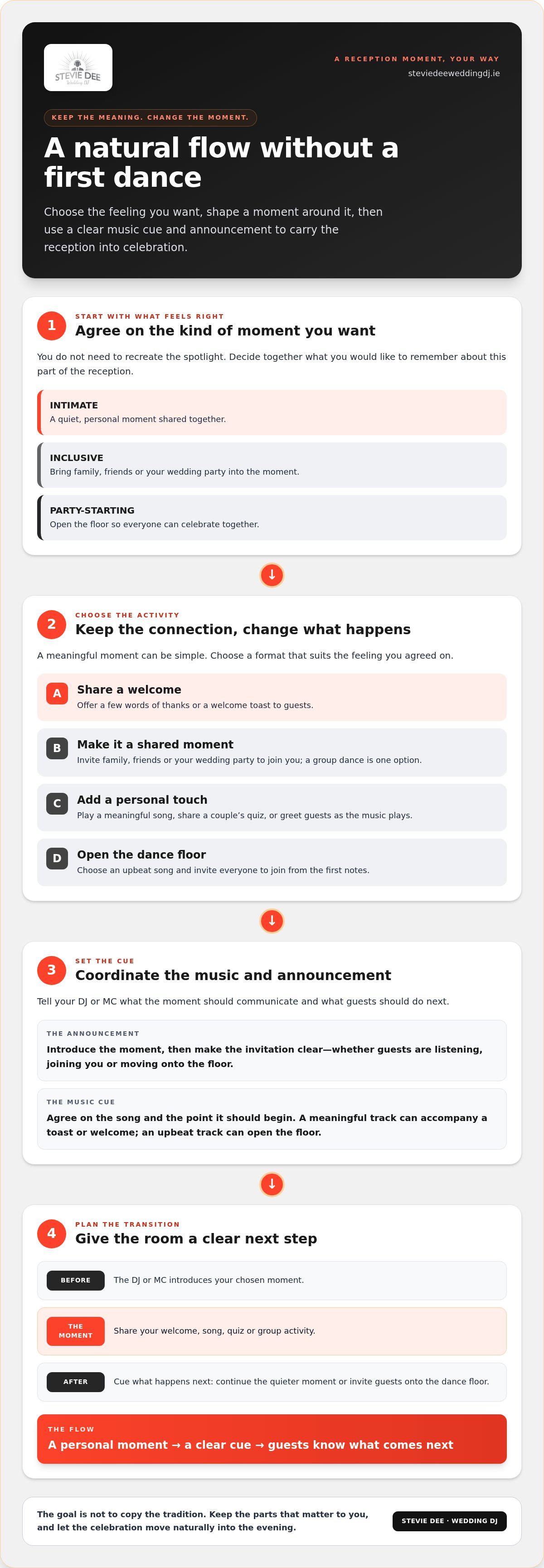
A good alternative should feel comfortable for both of you and make sense in the flow of your reception. A little planning helps you avoid an awkward pause, explain the moment without overexplaining, and enjoy it instead of managing it on the day. If you’re deciding what to do if you don't want a first dance, work through these choices together.
Choose an option together, without pressure
Start with your own preferences, not your family’s expectations or what you’ve seen at other weddings. You’re planning a shared celebration, so both partners should feel at ease with the moment.
Name what you want to avoid. Be specific. Is it dancing in front of everyone, being the centre of attention, speaking to the room, or having guests participate? Naming the uncomfortable part helps you rule out ideas that recreate the same pressure in a different form.
Share what you’d enjoy instead. One partner might like a favourite song, while the other would rather welcome guests with a toast. Look for overlap, such as playing that song while inviting friends to join you, or keeping the toast brief before opening the floor.
Agree on the purpose and tone. Decide what you want the moment to do. Should it feel intimate, bring loved ones together or launch the party? Matching the idea to that intention makes the choice easier and keeps it personal.
Set the participation level. Choose whether guests will watch, join in, or simply continue enjoying the reception. If you want a group moment, make joining feel like an invitation rather than an obligation. If you prefer less attention, pick an option that doesn’t draw everyone’s focus to you.
Prepare guests and the reception flow
Once you’ve chosen, decide how much explanation the moment needs. A small private moment may not need an announcement. A quiz or group activity usually benefits from a short introduction so guests know what’s happening and can take part if they wish.
Choose the music and cue. Agree on the exact song, the point it should begin and what should happen when it ends. Share any must-play or do-not-play preferences with your DJ so the music supports the mood you want.
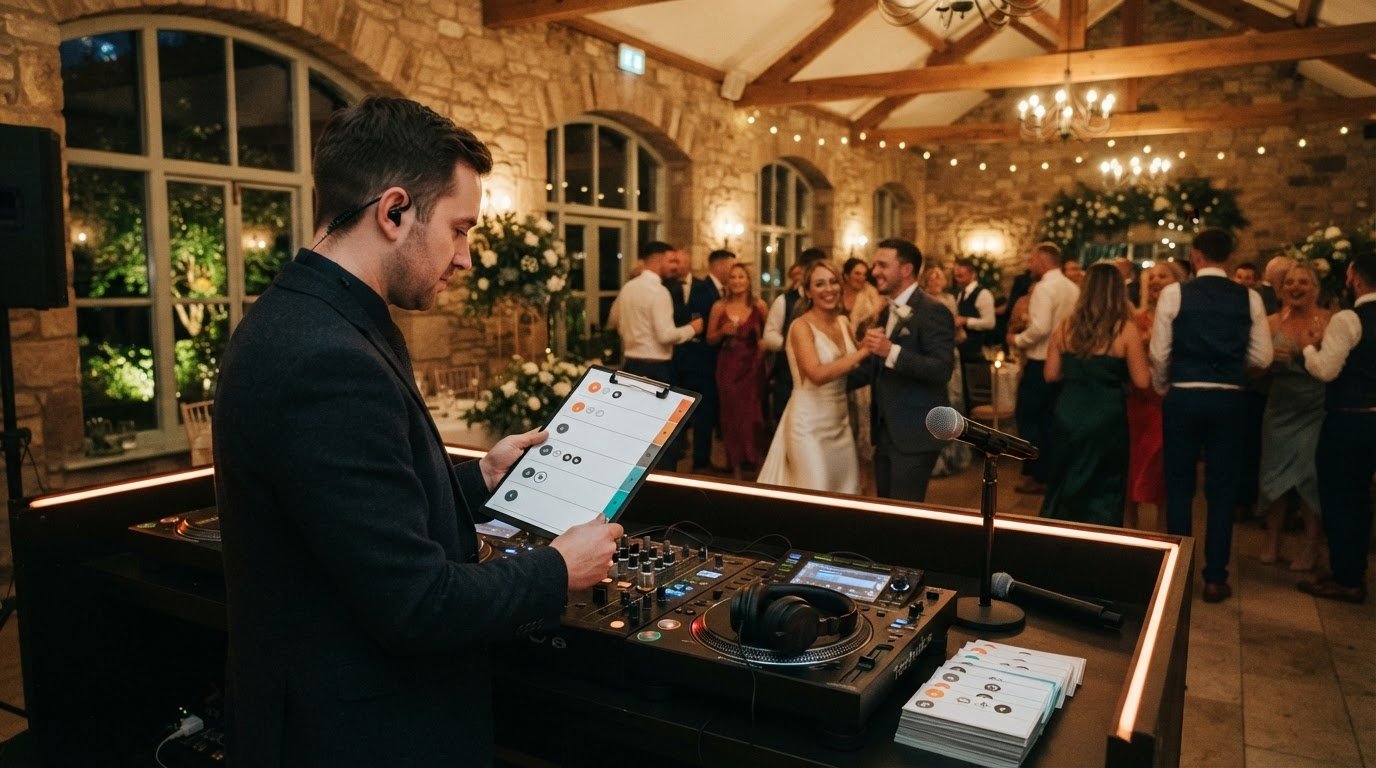
Plan the words and next step. Give the person hosting the reception a simple outline: how to introduce the moment, whether guests should gather or join in, and what comes next. A professional MC can make a clear announcement and guide the transition without making it feel overly formal. Understanding what a professional wedding MC does can help you decide what kind of hosting support suits your plan.
Run through the sequence together: what guests are doing beforehand, how the moment begins, and what follows. Clear cues give everyone a comfortable lead-in and keep the evening moving.
If you’d like help shaping the music and MC cues around your plans, explore wedding DJ and MC support for a reception that feels personal, relaxed and ready to celebrate.
Make Your First Dance Alternative Flow Into a Celebration
A thoughtful alternative feels most natural when it has a clear beginning and a next step. Guests don’t need a long explanation, but they do need a cue: should they listen, join you, raise a glass or head to the dance floor? Plan what happens immediately before and after your chosen moment, and the reception can move smoothly without recreating the spotlight you wanted to avoid.
Coordinate the music and the moment
Choose the track or musical cue that suits the moment, then share it with your DJ in advance. If you’d like a particular song played, include it in your must-play preferences. You can also provide do-not-play choices so the music reflects what you want throughout the evening. Guest requests are welcomed and incorporated when appropriate, while your preferences help shape the overall musical direction.
Next, agree on the announcement. A short introduction can explain the moment and invite guests to take part without turning it into a speech. For example, an MC might welcome everyone to join you on the floor, or simply announce that the evening celebration is beginning. If you’re sharing a toast, let guests know whether they should stay seated or gather nearby. Clear words make it easier for people to follow along.
Think through the sequence, too. If the alternative is a group activity, decide how guests will know it’s starting and how it will end. If it’s a song played while you remain with your guests, choose what the DJ should play next so there’s no gap. A planned cue gives the moment shape while leaving room for it to feel relaxed rather than rehearsed.
Build an evening that feels like you
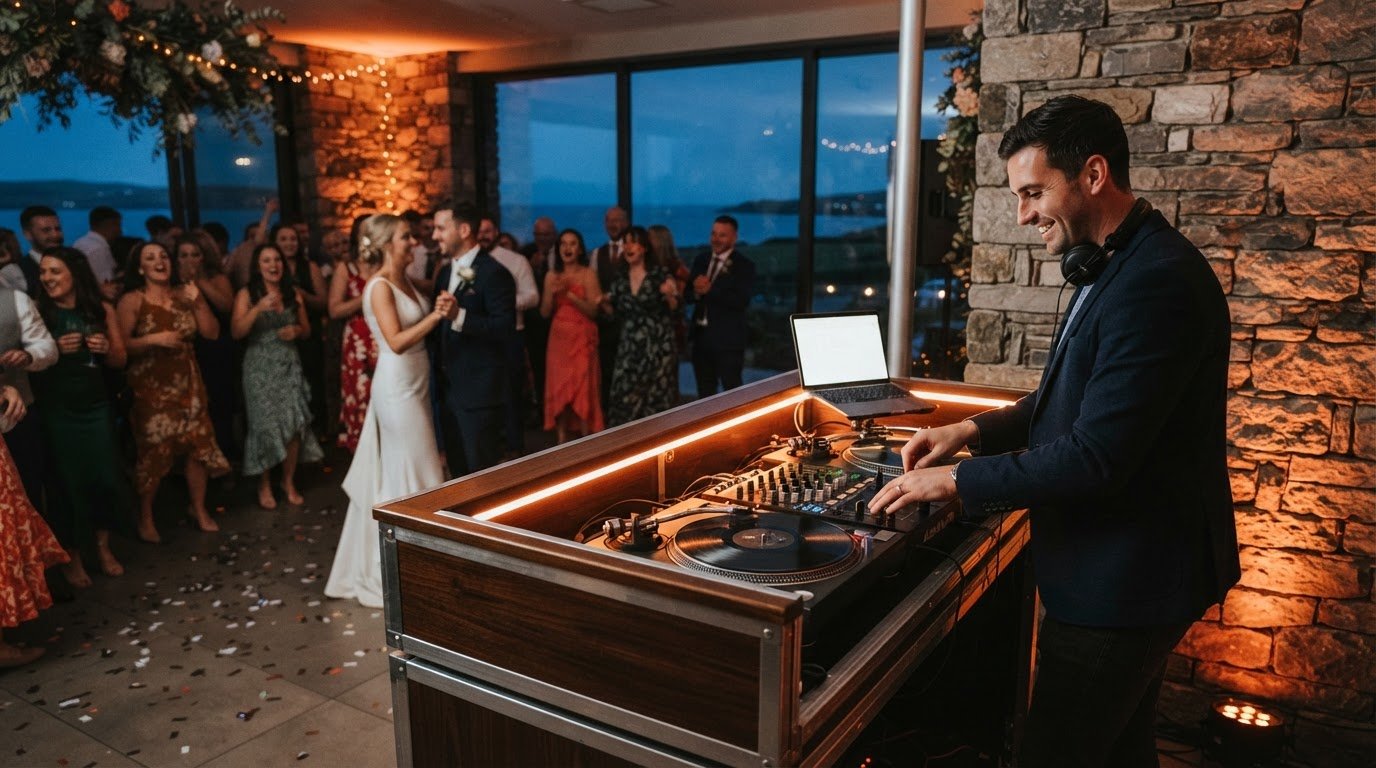
Your transition can be quiet, playful or high-energy. A gentle track can create a warm pause; a brief announcement can lead into a shared toast; an upbeat song can signal that the dance floor is open. Choose the mood that suits you both, then let the music and hosting support it.
Stevie Dee brings 20 years of experience as a wedding DJ and MC, combining music and announcements to help the evening flow. Couples can share their preferences in advance, and DJ and MC services can be provided by the same person. Optional lighting packages, including uplighting and dance-floor lighting, can also help shape the atmosphere, from a softer setting for the moment to a brighter feel as the party gets underway.
Before the reception, picture the transition from the guests’ point of view: what they’re doing, what they hear and what they’re invited to do next. That simple check can reveal whether your announcement needs one more detail or whether a quiet cue is enough. You don’t need to make the alternative a big production. A clear plan, a meaningful choice and a confident handover can carry the celebration forward.
If you’d like an experienced DJ and MC to help coordinate the music and announcement around your plans, explore Stevie Dee’s wedding DJ and MC services and create a reception that feels personal from the first cue to the dance floor.
Make the Moment Yours
Your reception doesn’t need to follow a script to feel complete. Choose the moment you’ll look forward to sharing, then give it room to unfold in a way that feels comfortable for both of you. If you’re still deciding what to do if you don't want a first dance, let your own preferences lead. The right alternative can be simple, personal and full of meaning.
When you’re ready to shape the music and hosting around your plans, explore Stevie Dee’s wedding DJ and MC services. Personalised music planning, wireless microphones for speeches and toasts, and backup equipment help support a reception that feels considered from the first cue. You can focus on being present with each other and your guests, while the celebration finds its own rhythm.
Your wedding, your moment, your way. Make it one you’ll be glad to remember.
Frequently Asked Questions
Is a first dance expected at every wedding reception?
No, there’s no universal rule that every couple must have a first dance. It’s a familiar tradition, not a requirement. If you’re deciding what to do if you don't want a first dance, choose whether another moment would feel right or whether you’d rather move straight into the next part of the evening. Update your reception timeline so the people helping run the day know what to expect.
Can we have a private first dance before the reception?
Yes, you can share a private first dance before the reception or at another point in the day that feels comfortable. Decide together whether you’d like photographs of the moment or want it to remain a quiet memory just for you. Choose the song in advance and tell the people coordinating your day when and where you’d like the moment to happen, so it isn’t interrupted by other plans.
What if one partner wants a first dance and the other does not?
Talk about what each of you values before deciding on the format. One partner might care most about hearing a meaningful song, while the other may not want guests watching. Each of you can name one thing you’d like to keep and one thing you’d prefer to avoid. Then choose a version that respects both, rather than treating the decision as one person winning and the other giving in.
Should we tell guests in advance that there will be no first dance?
You can, but you don’t need to make a formal announcement. If you think close family or your wedding party may expect the tradition, tell them privately beforehand so they’re not left wondering what’s happening. You can keep the explanation simple: you’ve chosen a different way to mark the occasion. If you’d rather not discuss it, the reception can continue without drawing attention to the decision.
What happens if guests ask for the first dance during the reception?
Prepare a friendly response so the question doesn’t catch you off guard. You could say, “We’ve chosen another way to celebrate, but we’re delighted you’re here with us.” If you have a planned alternative, point guests towards it. Let the person hosting know your preference in advance, too, so they can answer questions and help keep the moment comfortable without making a big announcement.
Can family traditions shape our first dance alternative?
Absolutely. You can keep the part of a family tradition that matters to you and adapt the rest. Perhaps a relative’s favourite song could accompany a toast, or family members could join you for a shared moment. Talk together about which elements feel meaningful, then explain your choice kindly if relatives ask. A personal adaptation can honour family while still making the celebration feel like your own.
Ready to plan music and hosting that fit your celebration? Explore Stevie Dee’s wedding DJ and MC services and create a moment that feels like you.
Comments