
What if I don't like the DJ's music at my wedding?
Your wedding soundtrack can reflect your taste while still welcoming your guests. If you’re wondering, “What if I don’t like the DJ’s music?”, agree on your musical direction and no-play songs in advance, then leave room for the DJ to read the crowd. Your favourite songs can shape the night without dictating every track.
It’s reasonable to want music that feels like you, especially when the celebration matters so much. At the same time, weddings bring different ages, tastes and dance-floor moods together, so a little flexibility can help the party find its rhythm.
Balance your must-plays with guests’ tastes, share no-play requests clearly and give the DJ room to adapt as the evening unfolds. Matching the entertainment to your plans helps make the music personal, welcoming and ready for a lively dance floor.
Table of Contents
1. Balancing the couple’s preferences with guests’ tastes
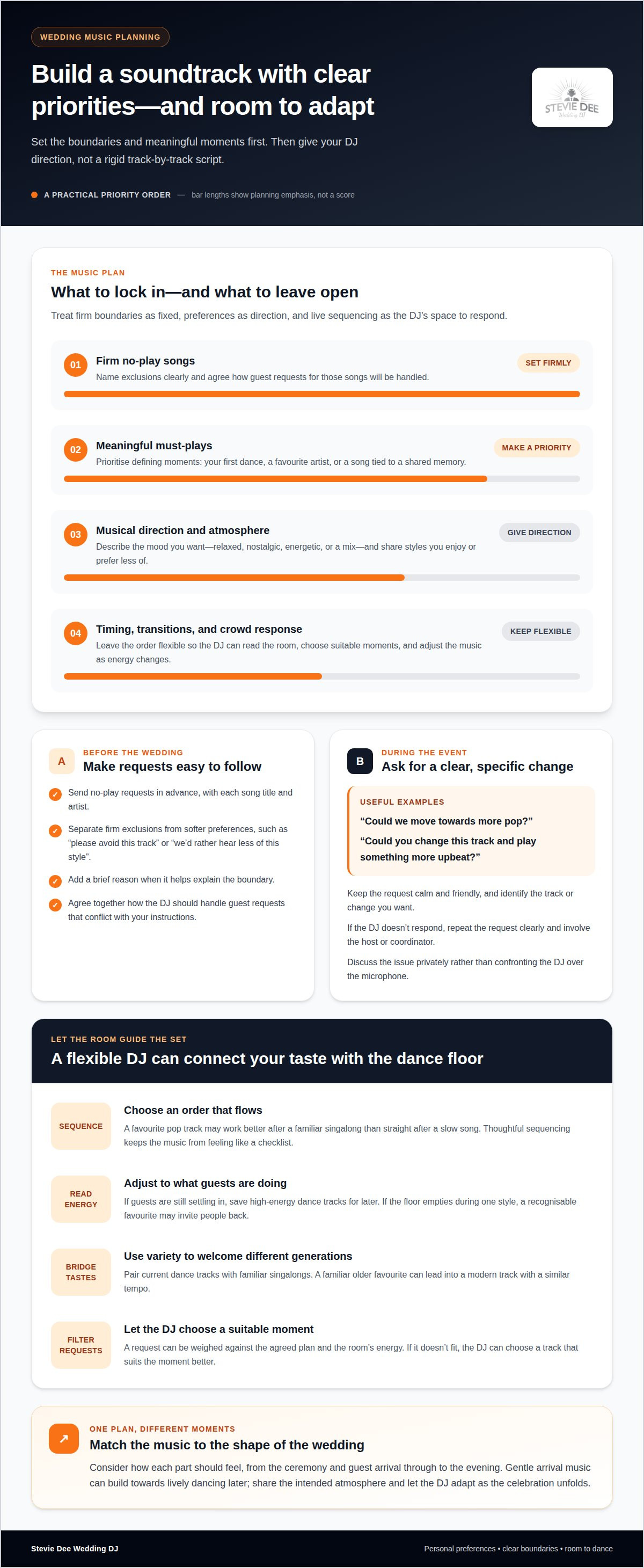
Start with the music that makes the celebration feel like yours. Choose defining tracks, such as your first-dance song, a favourite artist or a song tied to a shared memory. Then describe the atmosphere you want: relaxed, nostalgic, energetic or a mix. This gives the DJ a clear direction without turning the evening into a playlist played in order.
Think about who will be there, too. Wedding guests can range from young children to older adults, and one genre may not suit everyone. For example, pair current dance tracks with familiar singalongs that invite different generations onto the floor. The goal isn’t to include every guest’s favourite, but to offer enough variety for people to join in.
A useful balance is to separate essentials from preferences. Mark your first dance and any genuinely meaningful songs as priorities, then share artists or styles you’d enjoy hearing. A note such as “we love soul and pop, but prefer less country” is more useful than a long, rigid sequence. It gives the DJ room to connect your taste with the crowd’s response.
If you’re unhappy with the music during the event, speak calmly with the DJ or the person managing the event and explain what you’d like changed. You can also leave if you choose. Before you do, tell the organiser what’s wrong so they have a chance to respond.
Whether a refund applies depends on the booking terms and what happened at the event. A difference in musical taste alone doesn’t determine the appropriate remedy. For example, playing a requested genre is different from failing to follow an agreed no-play request.
When generations have different tastes, variety can bridge the gap. A DJ might move from a familiar older favourite to a modern track with a similar tempo, keeping the transition smooth. Agreeing on your priorities beforehand helps the soundtrack feel personal while giving guests reasons to dance.
2. Discussing no-play requests with the DJ in advance
Send no-play requests before the wedding, while there’s time to discuss what each boundary means. A song you dislike may be a guest favourite, so explain whether it’s a firm exclusion or simply not your preference. If you’re asking, “What if I don’t like the DJ’s music?”, decide what you’d want changed and share that direction in advance.
Make the list easy to use. Include each song title and artist, adding a brief reason when it helps explain the boundary. Separate firm no-plays from softer preferences, such as “please avoid this track” or “we’d rather hear less of this style”. That distinction helps the DJ understand what’s essential and where there’s room to adapt.
Discuss the list together and agree how requests will be handled. If a guest asks for a song on your no-play list, the DJ can decline politely or choose an alternative. A guest request doesn’t automatically override the couple’s agreed instruction. If you’re still wondering, “What if I don’t like the DJ’s music?”, agree on a simple way to ask for a change during the event.
If you dislike the music during a party or wedding, approach the DJ calmly and ask for a specific change. Say, “Could we move towards more pop?” or request a particular song. A clear suggestion gives the DJ something practical to work with.
Keep a request brief and friendly: “Could you change this track and play something more upbeat?” The event host or venue representative can also communicate the couple’s agreed direction and ask the DJ to adjust the music.
If the DJ doesn’t respond to a request, repeat it clearly and involve the host or coordinator. Identify the specific track or change you want, then discuss the issue privately rather than confronting the DJ over the microphone.
For a cohesive soundtrack before the dancing begins, music can shape the pre-reception atmosphere and establish the mood as guests arrive.
3. Giving the DJ flexibility to read the crowd
A playlist fixed from first dance to final track can’t respond to changing energy. At an Irish wedding, the room may shift from guests chatting near the tables to a busy dance floor. A DJ can notice that change and adjust the tempo, genre or volume of the next selection.
Share your key songs and boundaries, then let the DJ choose the order and transitions. A favourite pop track, for example, might work better after a familiar singalong than immediately after a slow song. Thoughtful sequencing helps the music flow instead of feeling like a checklist.
Guest requests can add spontaneity, but requests gathered in advance from many people may make a set feel disjointed and cause guests to lose interest. An uncoordinated list might jump from a ballad to heavy dance music, then to an unrelated novelty track. Let the DJ handle requests during the event, weighing each against the atmosphere and the audience’s response.
How do Irish wedding and party DJs handle song requests? They can take requests during the event, choose a suitable moment and switch genres quickly. If a request clashes with the agreed plan or the room’s energy, the DJ can choose a track that fits better.
For example, if a group asks for high-energy dance music while guests are still settling in, the DJ might save those tracks until more people are ready to dance. If the floor empties during a run of one style, switching to a recognisable favourite can invite guests back.
Agree on the essentials before the event, including your first dance and firm no-play songs. Then give the DJ discretion over transitions, timing and spontaneous requests. This keeps your preferences in view while letting the music respond to the people in the room.
4. Matching the entertainment to the wedding
Choose entertainment to suit the shape and atmosphere of your wedding, not just one favourite genre. A formal celebration might begin with gentle music as guests arrive and build towards lively dancing later. A relaxed gathering may call for a different pace. Consider how each part of the day should feel, from the ceremony to the evening, and share that vision with the person handling the music.
Discuss practical preferences before the event. Which moments need a particular song? Which styles suit the evening, and which would clash with the atmosphere you want? If you’re asking, “What if I don’t like the DJ’s music?”, explain the change you’d welcome, such as moving towards more familiar songs or easing back on a particular style.
A few songs or bands can give a DJ a useful sense of your taste. Explain what you like about them, whether it’s the era, rhythm or vocals, rather than expecting every example to appear in the set. That context helps the DJ find music with a similar feel while shaping the night around your wedding.
Your entertainment choice also affects how the music can evolve. Some wedding bands start with older songs and move towards more modern music as the evening progresses. A DJ can shift between styles and respond to the room. If you’re still wondering, “What if I don’t like the DJ’s music?”, discuss how you’d like the atmosphere to change if the set isn’t working for you.
Match the format to your priorities: a live sound or a DJ’s ability to move between genres and adapt the sequence. Talk through the wedding’s mood, key moments and musical boundaries before deciding. Plan music around your wedding by starting with the atmosphere you want guests to remember.
Stevie Dee Wedding DJ: Pre-Reception Music
Stevie Dee Wedding DJ can shape the soundtrack from the first welcome through the evening celebration. Pre-Reception Music sets the tone as guests arrive, creating a considered start before the dance floor opens. It helps the music feel connected across different parts of your wedding.
For couples who want music through the evening, a Full Night Wedding DJ can bring your preferences and no-play requests together with room for crowd-led choices. Share the atmosphere you’re aiming for and the songs that matter most, so the musical direction feels personal without becoming rigid.
To discuss the music for your wedding, contact Stevie Dee Wedding DJ.
Shape the celebration you want to remember
Your wedding soundtrack should feel like part of the day you’ve chosen to create. Think beyond individual songs and picture the feeling you want for the final dance: joyful, relaxed, full of energy or unmistakably yours. That bigger vision can guide decisions when musical tastes differ. If you’re wondering what to do if you don’t like the DJ’s music, a clear conversation about the atmosphere you want is a constructive place to start.
Stevie Dee Wedding DJ offers Destination Weddings Ireland and Wedding Celebrant Service. These options may suit couples planning a celebration abroad or looking for celebrant support alongside their wedding entertainment.
Share what you’re planning and contact Stevie Dee Wedding DJ to discuss your wedding. Your celebration can have a soundtrack that feels personal, welcoming and ready for a brilliant night.
Frequently Asked Questions
Ask the Experts: Do You Recommend Giving the Band/DJ a List of Songs You Like and Don't Like?
Yes, a focused list helps communicate your musical direction without dictating every track. Add a short note explaining what you enjoy about each example, such as the vocals, tempo or era. This gives the DJ useful context when selecting similar music. Choose varied examples that show the overall feel you want, rather than relying on one artist.
Can I request songs from a DJ during a party or wedding?
Yes, you can make a request during the event, ideally during a natural pause rather than while the DJ is speaking or managing a transition. Give the song title and artist, and mention if it suits a particular moment, such as later in the evening. The DJ can place it where it fits the event’s flow. For a wedding, avoid asking for several tracks at once.
What music choices should couples agree with a wedding DJ in advance?
Agree on the songs for important moments, including the ceremony entrance, signing and first dance, if music is planned for them. Discuss whether announcements should have music, and the atmosphere you want during guest arrival and the meal. For example, decide whether those earlier moments should feel calm or lively. Sharing the order of key events helps coordinate the music with the day.
Does a DJ contract specify song requests or playlist control?
A contract may explain how requests, must-play songs, no-play tracks and playlist discretion are handled, but the wording varies. Read the agreement to understand what it says about music selection and any promises about particular songs. If you want a specific boundary recorded, ask for clear wording in the written agreement before signing. Keep a copy of the final version with your wedding plans.
Comments